

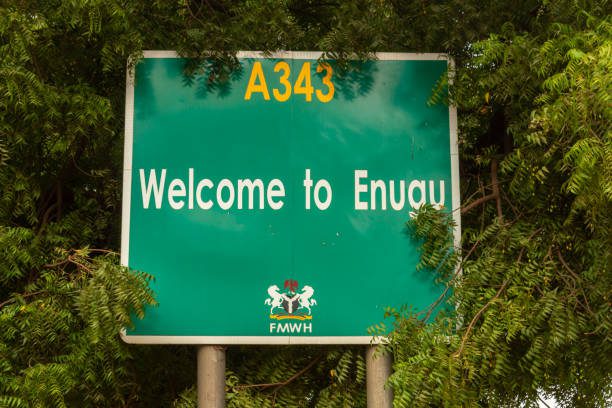
Enugu in Nigeria is an urban centre for the southeast region and is famous for its clean streets, greenery, and cool weather. The state, over the years, has earned itself the title of the destination for high-end living in the Southeast region.
The Enugu state demographic is astutely educated, urban, and is mostly made up of fun-loving people who take time to relax and enjoy themselves. The state is heavily influenced by major tertiary institutions domiciled in it, contributing to the quality of its society and playing a significant role in the state’s economy.
Enugu in Nigeria is popular amongst young South-Easterners; the state has become the choice location for many futuristic events, conferences, and conventions spanning the tech, cultural, and political sectors.
A good example of such events is the recently concluded Nigerian Bar Association (NBA) Annual General Conference (AGC), which attracted a whopping 20,000 Nigerian lawyers to the state. Aside from MICE events, Enugu is also a hotbed for tourism, attracting tourist investment like the Landmark Nike Lake Resorts Enugu, spearheaded by Landmark Africa Group, founded by Paul Onwuanibe.
On a lighter note, Enugu is also popular for its homegrown delicacies and contribution to the Igbo cultural revolution through its music and pop culture.
Enugu is many things to the southeast region, and is without doubt a significant state in the space.
Our Weekly INFOEAST deep dive looks at 25 facts about Enugu in Nigeria, which we think our readers should know. Let’s Go!
Enugu in Nigeria is Located in the South-Eastern Part of the Country
Enugu in Nigeria is located in the South-East geopolitical zone of Nigeria. The sleepy state is bordered by Benue and Kogi to the north, Ebonyi to the east and southeast, Abia to the south, and Anambra to the west.
Enugu is considered a central state in the southeast region for business purposes, as the remaining four southeastern states (Anambra, Ebonyi, Imo, and Abia) could be reached in less than three and a half hours from the city centre.
It has an active airport and an Airline (Enugu Air) for air travel, and a robust mass transit system for road travel. So, yep, you can reach other southeastern states easily from Enugu.
The State was created in 1991 and was an administrative capital
Enugu State was created on August 27, 1991, from the eastern two-thirds of Anambra State during the military administration of General Ibrahim Babangida. The state shares a birthday with Abia state, another important South-eastern state.
Enugu became a British administrative center in 1915, evolving into the capital of the Southern Provinces by 1939 and the Eastern Region in 1946. Enugu, to this day, is still regarded as the de facto capital of the Eastern region and retains some of the administrative structure it inherited during its time as capital. It is also the home of some of the oldest political structures in the eastern region.
Enugu has an average landmass and population density
According to Wikipedia, Enugu covers a land area of 7,161.3 square kilometers (approximately 2,800.0 square miles), ranking 29th in size among Nigeria’s 36 states. The population density is approximately 456 people per square kilometer, accounting for about 2.3% of Nigeria’s total population
The state still has large swathes of unoccupied territory, which lately became an abode for marauding herdsmen and bandits, creating a security situation. The Enugu State government addressed the situation by establishing forest guards to protect its forests.
The initiative has proved to be sucessful while creating a means of employment for able-bodied Enugu and Nigerian youth.
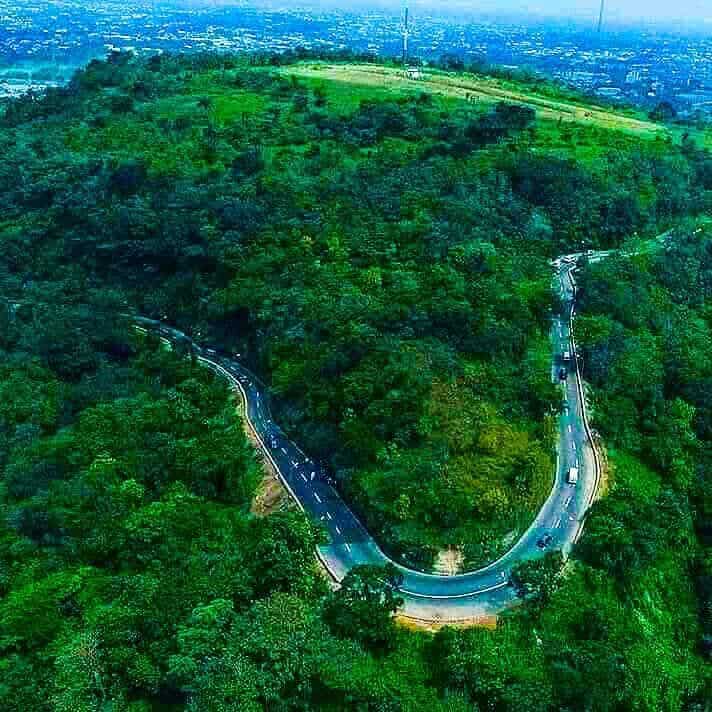
Enugu and Nsukka are the two frontline cities in the state
Enugu city and Nsukka are two major cities in Enugu, followed by Agbani, Awgu, and Udi suburbs. Enugu city takes center stage, housing most of the businesses and government presence in the state.
Nsukka comes in second as a university town, housing the University of Nigeria, Nsukka, one of the biggest universities by population and rankings in Nigeria. The majority of the Nsukka population is mostly students and indigens, with the economy of the town heavily dependent on the university.
Agbani, Awgu, and Udi are agricultural and mining enclaves representing a bulk of Enugu’s historical economic exploits.
Enugu is predominantly Igbo
The majority ethnic group is the Igbo people, with minority Idoma and Igala communities in areas like Etteh Uno in Igbo Eze North LGA. Enugu’s official languages are Igbo and English, with Igbo being the predominant indigenous language spoken across the state.
The state is historically home to the Wawa race of the Igbos, occupying the land before the arrival of the white men in Igbo land. Pre-colonial Enugu was part of the medieval Kingdom of Nri and the Aro Confederacy, centered in Arochukwu, influencing trade and culture until the Anglo-Aro War.
At a cultural level, Enugu is known for its distinct ogene music and the Okpa delicacies, which attract food tourists to the state. The Udi palmwine is also a cut above the rest of the other variants found in other parts of Igbo land.
Enugu’s Climate is cooler than other parts of Nigeria
Enugu experiences a tropical savanna climate, with average annual temperatures of 28.27°C (82.89°F), slightly cooler than Nigeria’s national average. The hottest month is February, while December is the coolest (15.86°C/60.54°F); humidity peaks from March to November.
Annual precipitation averages 158.57 mm (6.24 inches) over 192.73 rainy days (52.8% of the year), with July’s peak at 35.7 cm³ and February’s low at 0.16 cm³.
The Nsukka weather is known for its cold climate, resembling the average weather overseas. This phenomenon adds to the town’s tourist attractions.
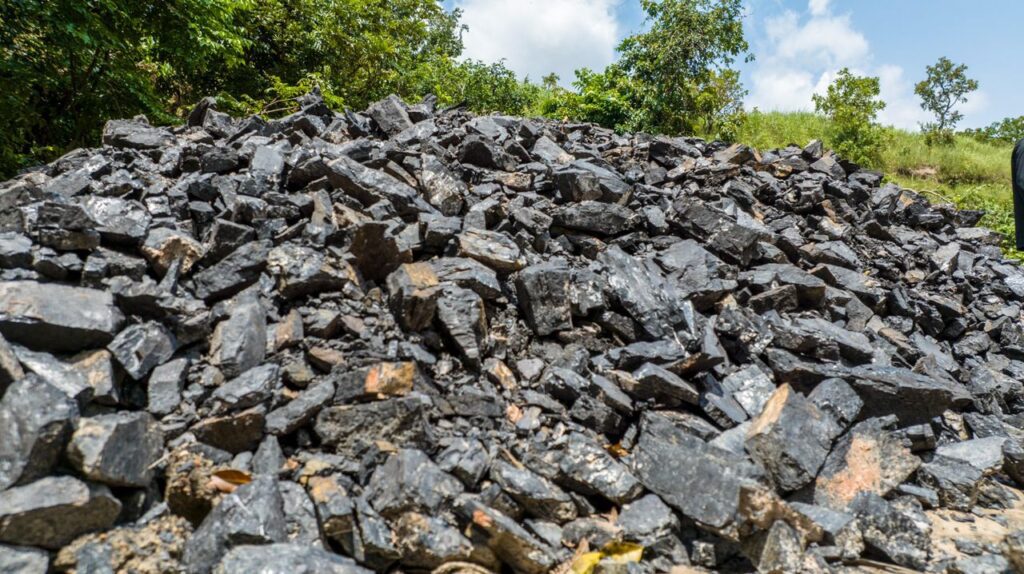
Enugu’s economy was powered by Coal in colonial times
Known as the coal city, Enugu, in colonial times, was mainly a centre for coal mining supervised by the British, who discovered the coal. Coal was discovered in 1909 by British engineer Albert Kitson in the Udi Ridge; the first shipment to Britain occurred in 1914, resulting in the railway development.
Local Enugu indigenes worked as labourers in the coal mines, forming a pretext of Enugu’s long history of being a workers’ state. The Iva Valley massacre was a sad event that followed an altercation between the colonial bosses of the mine and the local Igbo workers in the mine.
The dispute led to 21 coal miners losing their lives to the guns of the colonial administrators. The tragic event is remembered in monuments and recorded history today.
Enugu was the capital of the secessionist Biafra
During the 1967-1970 Nigerian Civil War, Enugu served as the initial capital of secessionist Biafra until its capture by federal forces in October 1967.
After the war, the area reformed as East Central State and then part of Anambra State until Enugu’s creation in 1991.
Enugu State comprises 17 Local Government Areas (LGAs), including Enugu North, Enugu South, Nsukka, and Udi. The state is known for political homogeneity, maintaining one political party for nearly 20 years.
Enugu is currently an APC state
After nearly 20 years of the People’s Democratic Party (PDP) reign in Enugu state. The current Enugu Governor, Peter Mbah, defected to the All Progressives Congress, ending a nearly 20-year reign of the PDP.
Mbah cited the need to align the state to the centre, as the APC is the current ruling party, and also increase Enugu’s chances of getting federal presence.
Peter Mbah moved with his entire political structure in the state, comprising past governors Sullivan Chime, Chimaroke Nnamani, and Ifeanyi Ugwuanyi. Also involved in the mass exodus to the APC were high-ranking cabinet members and commissioners.
Mbah’s cross over to the APC took the tally of APC governors to three in the southeast, including Hope Uzodimma of Imo State and Francis Nwifuru of Ebonyi State.
Aside from the facts listed above, Enugu’s unique value proposition is its urban-centric nature and relatively educated population.
According to the 2006 census, Enugu State’s population was 3,267,837; the 2022 census estimates it at 4,690,100, ranking 22nd among Nigerian states.
Due to its progressive demographics, Enugu is a choice location for young people in the South East looking to network and build new-age careers. Events like the Eth Enugu Conference and Enugu State Campus Hackathon attracted hundreds of tech and blockchain-savvy youths to the state to network and exchange ideas.
In the entertainment scene, Enugu has long positioned itself as a hub for Igbo-themed music, ranging from traditional ogene music to Igbo hip-hop and drill music.
Top Southeast artists like Flavour, Phyno, and Jeriq all got their start in the state, cementing its position as the hub for Igbo culture renaissance and music.

For tourists looking to explore the city, it is easy to engage the services of tour guides who are quite affordable and will plan every step of your travel and tour around the city.
Enugu’s hospitality sector received a boost with the renovation of the Enugu Presidential hotel and the ongoing construction of the ICC hotel by Chinese contractors. Shopping and retail activity is covered by the presence of South Africa’s retail giants, Shoprite, and Nigeria’s very own Roban Stores.
Enugu is a lovely place to visit; it is safe, cool, green, and urban. It serves as a getaway spot from the commercial bustle in Anambra and Abia states.
Enugu in Nigeria is open to migration and tourism, as it continues its journey to becoming a 21st-century urban city at the same level as Lagos, Cape Town, and Nairobi.
