

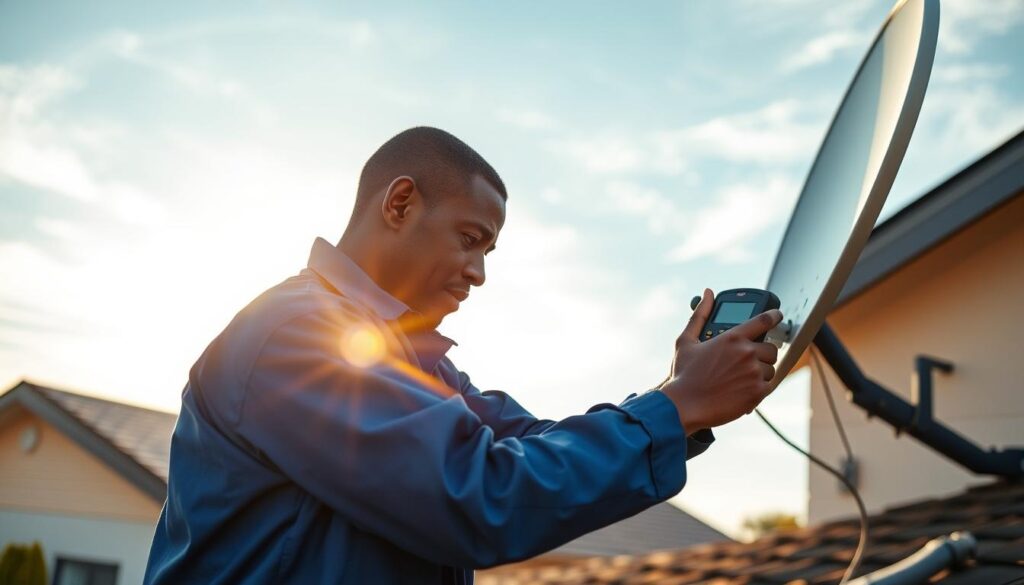
The DSTV Frequency is the technical setting required to receive a smooth, clear signal from DSTV’s satellite. The DSTV frequency is better understood by the technical staff at DSTV retail stores, but a little knowledge on the part of consumers is not bad.
Besides correctly positioning the DSTV dish, a proper DSTV frequency setting must be configured in the decoder to receive a clear signal. The DSTV signal in West Africa is distinct across all areas and is usually known by the DSTV technical staff.
For a smoother, hassle-free experience, we advise you to engage a technical DSTV staff member to handle the installation. They are usually more experienced and can get the job done in less than an hour.
But if you are technically inclined and would like to do it yourself. This article will go a long way in helping you achieve that.
DSTV West Africa / Nigeria Core Frequency Setting
For a standard DStv installation on most decoders, use these primary transponder details:
- Satellite: Eutelsat 36B (36.0°E)
- Frequency: 12245 MHz or 12264 MHz
- Symbol Rate: 27500 KS/s
- Polarisation: Vertical (V)
- LNB Type: Universal (9750/10600)
How to Input Frequencies and Correctly Configure Your Dish
If your decoder is stuck on “Searching for Signal” and you need to verify the network setup manually:
- Open Menu: Press the
Menubutton on your remote. - Go to Settings> Advanced Options > Dish Installation.
- Enter PIN: Use the default code 9949.
- Network Setup: Select Network 2 Setup (Leave Network 1/Home alone).
- Enable Signal: Set “Signal Setup” to Enabled.
- Enter Values:
- Frequency: 11170
- Symbol Rate: 26652
- Polarisation: Vertical
- Accept: Select “Accept all displayed values” and then Scan All Networks.
Universal LNB Settings
To ensure the frequency is received correctly, your LNB (the device on the “arm” of the dish) must be configured in the software:
- LNB Mode: Dual Frequency
- LNB Low Frequency: 9750 MHz
- LNB High Frequency: 10600 MHz
How to Fix Your Connection When it Rains
Whenever it rains in Nigeria, the DSTV connection tends to fade. Here is how to troubleshoot this issue and increase your chances of reviving your connection.
If you lose frequency during rain, your dish may be slightly misaligned. Ensure your Signal Quality is above 75%; strength alone isn’t enough.
- LNB Manual Setting: The LNB should not be perfectly vertical. In Nigeria, it usually needs to be tilted slightly (around the 4 o’clock or 7 o’clock position) to maximise the frequency reception.
- Ensure no new trees or buildings have grown into the line of sight between your dish and the eastern sky.
The procedures above require technical expertise, so it’s best to leave the process to DSTV technical experts. Major DSTV outlets have technical crews that handle customer installations. They are best suited to handle this process, given their experience and know-how.
If, by any chance, you still feel the need to do this yourself. Then follow the procedure in this article and get it done.
