

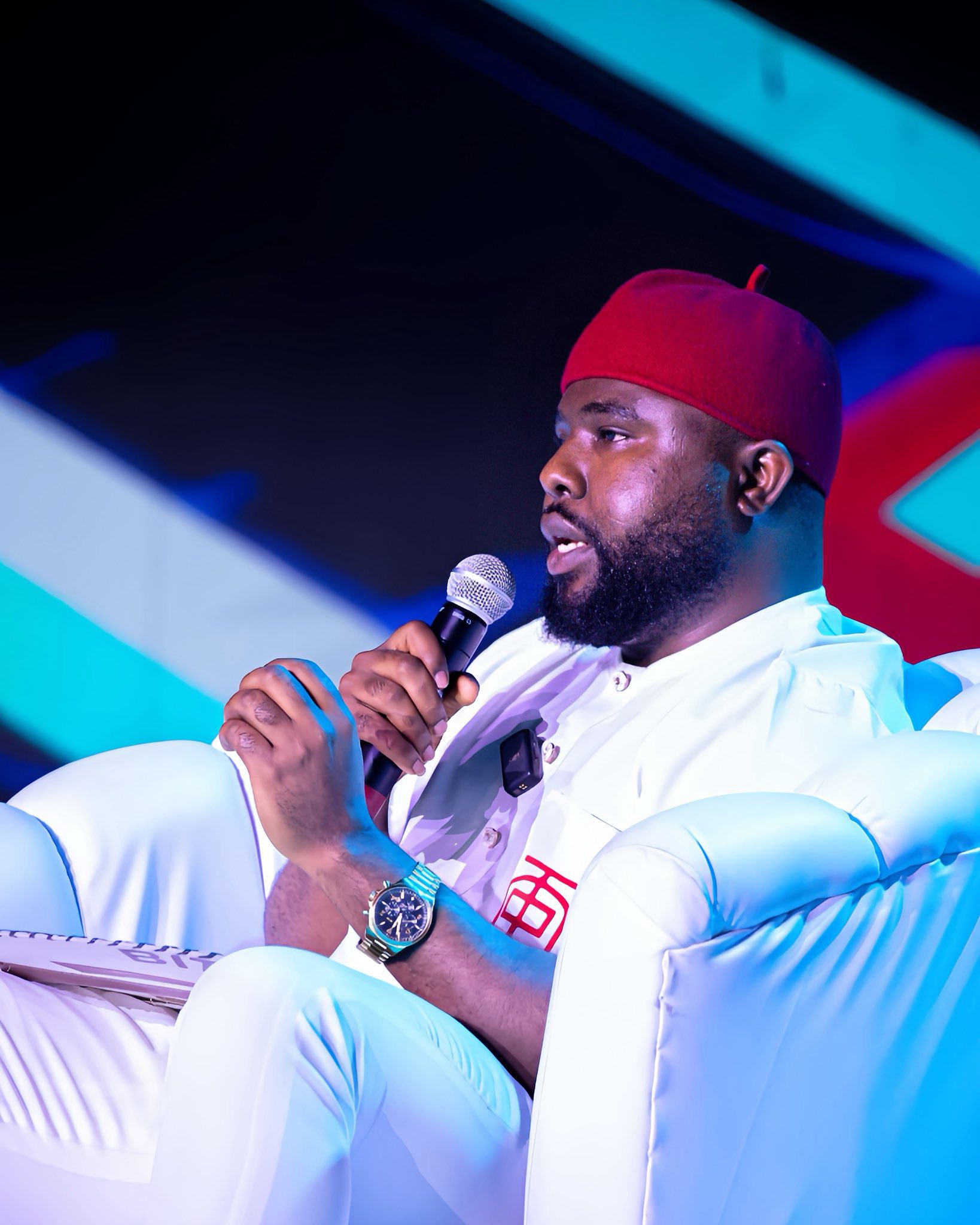
The Igbo department of the Nigerian Twitter space in recent days has been saturated with heated tweets from members of the Independent People of Biafra (IPOB) and fans of Gaius Chibueze, a popular Igbo activist and businessman.
The bone of contention stems from a speech made by Gaius Chibueze at the World Igbo Congress Convention in Boston, where he referred to IPOB members as “Homegrown Terrorists,” responsible for the security situation in the Southeast region.
The speech was not well-received by the media wing of IPOB, led by key figures like Chinasa Nworu. Nworu and fringe members of the IPOB took to X to register their reactions, starting a well-coordinated campaign of calumny on Gaius Chibueze, accusing him of being a poser and scammer, citing previous crypto projects launched by Gaius Chibueze, which turned out to be a scam.
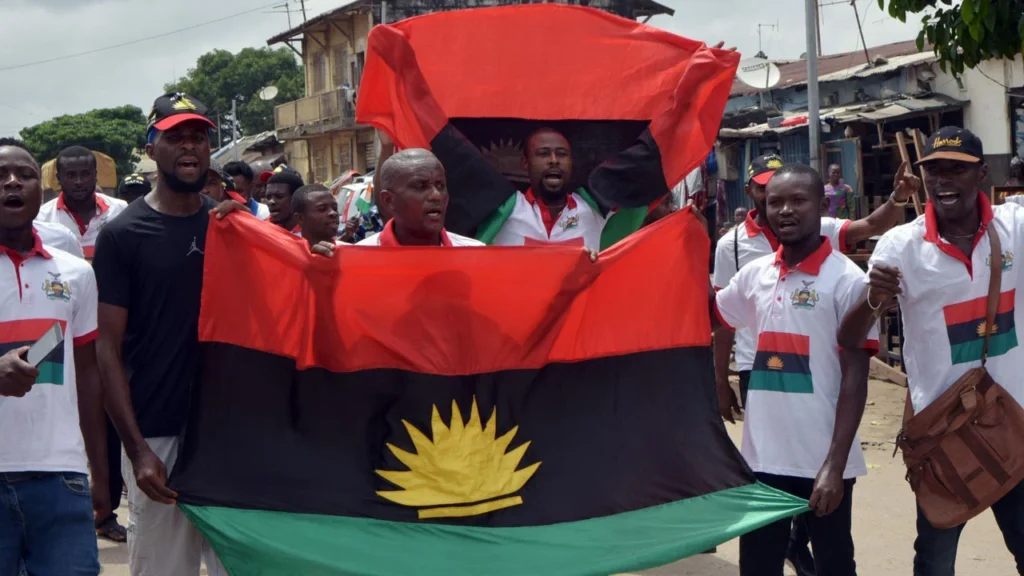
The back and forth between both groups resurrected the question of Nnamdi Kanu, IPOB founder, true legacy, with conversations navigating the sticky web of propaganda created by the Nigerian state through the nation’s traditional media and IPOB through its social media efforts.
Another pertinent question raised is the legitimacy of Mr Gaius Chibueze, who has been parading himself as a modern-day Deng Xiaoping, leading what he describes as the idea of economic biafra.
This Weekend, INFOEAST tried to shed some light on the debate, drawing on facts and a little bit of historical context.
Igbo Activism and Some Historical Context

The Igbos have always preferred systems over leaders.
An Igbo adage says “ Eze Bu ilo, “ a warning of the dangers and issues associated with centralized authority or the concentration of power in the hands of one man.
History has proven the Igbos right on this.
The Igbo activism space over the years has witnessed the coming of powerful figures who grew a sizable following by advocating for real issues affecting the Igbo nation, only to be corrupted by power and either sell out their movements for personal gain or steer the Igbo populace in the wrong direction.
The list is endless.
Ralph Uwazurike of MASSOB, Nnamdi Azikiwe, a foremost and well-respected Igbo leader who piloted national interest often at the expense of his own people, and Nnamdi Kanu, whose movement was infiltrated by mysteriously funded groups, which stirred the movement in the wrong direction.
The examples above highlight the dangers of a one-man movement in Igbo land, which has not really worked out well for Ndigbo.
Gaius Chibueze and his whole positioning and activism is another example of a brewing one-man movement.
The Historical data on such movements in Ala Igbo sounds a red flag, and we believe Igbos should look carefully before hopping on any bandwagon.
Make Alaigbo Great Movement vs IPOB
Gaius Chibueze is the pioneer of the Make Alaigbo Great Again (MAIGA) movement, modeled after the MAGA movement led by Donald Trump.
The movement looks to encourage Igbos to bring their investments back home and grow the region. It describes its idea as a sort of Economic Biafra, an updated concept of the Biafran ideology.
The IPOB movement, however, is purely political and draws inspiration from the perceived marginalization of Igbos in Nigeria by the Federal Government.
IPOB believes the solution to the Igbo marginalization problem is political, while MAIGA thinks otherwise. The clash of ideas has pitted Nnamdi Kanu against criticisms coming from people like Gaius Chibueze, who prefer an alternative solution.
However, the public debate is heavily in favour of IPOB’s stance, as many Igbos feel that no tangible economic progress can be made in the region if the Federal Government is not on board.
The argument is simple. You cannot really grow as a region if the FG is directly or indirectly sabotaging your efforts.
This line of thought remains the sole reason why IPOB and Nnamdi Kanu are still largely popular in the southeast, despite the efforts to demonize IPOB and its founder.
A Tainted Image

Gaius Chibueze, a serial investor and the founder of Eastside Ventures and Voice of the East Media company, is battling a tainted reputation following his exploits in the Web 3 space.
The activist and businessman have been accused of carrying out rug pull schemes with his crypto tokens.
According to previous reports, Gaius Chibueze launched Tatcoin around 2021, which reportedly peaked at ~$0.03 before dropping to near zero. He openly admitted to launching it in a 2023 X post, but claimed it was legitimate.
He also launched Groove Coin, which was hyped via partnerships with the Groove app. The project was accused of being a pump-and-dump where early buyers, including insiders, sold off, leaving retail investors with losses.
Gaius claimed to have made a fortune by investing in Bitcoin as early as 2011. While this seems credible, his recent involvement with shady Web 3 projects has tainted his reputation and legitimacy.
The accusations have placed the public perception of the visionary activist Gaius Chibueze at the border of a budding future Igbo leader or a closet grifter using his brand to defraud his followers.
What We Think
- At Infoeast, we remain committed to a resurgence in the Southeast region, taking the Southeast region back to its glory days under Mike Okpara.
- Our Conviction to see the East rise makes us natural allies to both IPOB and the MAIGA movement. We believe both movements are important in driving the discussion for a resurgence in eastern Nigeria.
- The back and forth between both groups is a net negative to the mission of growing the Southeast. Both groups can disagree on methodology, but should desist from infighting, as that does not serve the best interest of Ndigbo.
- Mr Gaius Chibueze slapping the terrorist label on IPOB is an oversimplification of a complex issue. We urge him to desist and apply more tact.
- On the Other hand, IPOB defaming Gaius Chibueze over his speech is throwing the baby away with the bathwater. Tact is also needed.
- Both groups should sheathe the sword and reach a common ground to continue the heavy task of liberating the south east from decades of political and economic marginalisation.
