

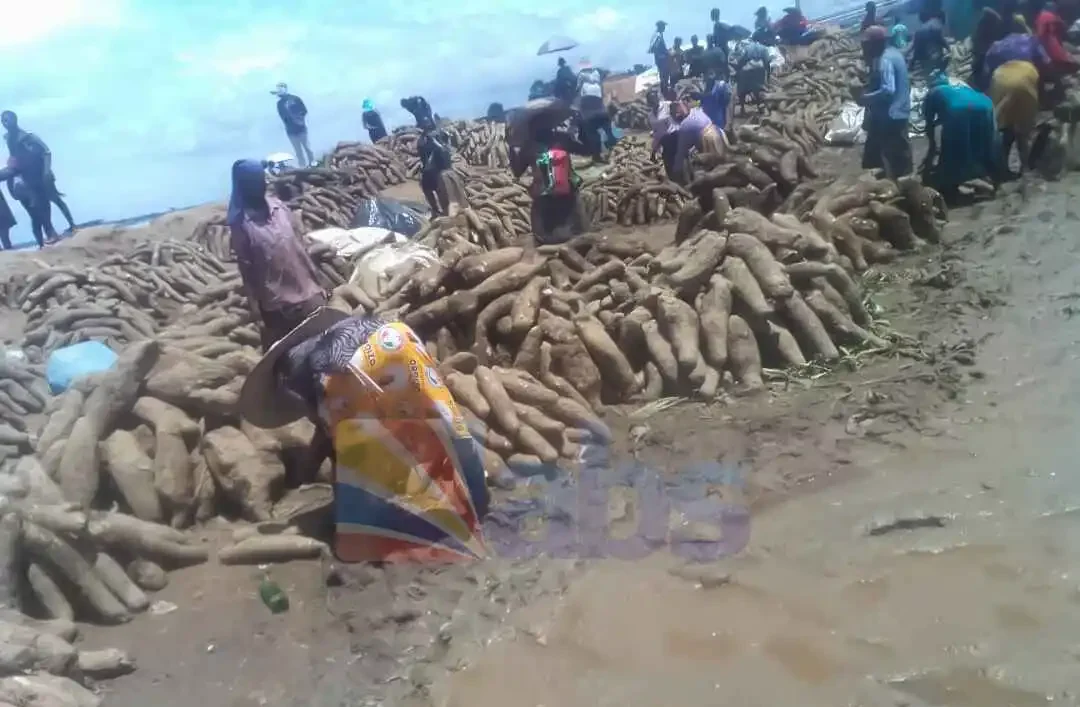
The commercial city of Onitsha in Anambra state is experiencing a windfall of bountiful harvest as New Yams flood the market from the agrarian communities across the river Niger.
The coastal Ose market, marine, and akpaka forest area were awash with fresh yam produce coming from the year’s harvest. Speaking to newsmen, the farmers claimed to have had a bountiful harvest this year and were satisfied with the level of patronage from buyers.
A brief survey of food prices in the state revealed a sharp drop in the prices of some staple foods like rice and garri. A painter of rice now sells at three thousand seven hundred naira as against six thousand naira, while a painter of garri now sells at one thousand two hundred naira.
The communities of Anam, Aguleri, and Umuleri in Anambra East and West are known for their agricultural output, especially yams, the staple and traditional food of the Igbo people.
In Anambra State, southeastern cultivation thrives in fertile riverine and savanna soils, supporting food security and livelihoods for millions. Examples of key communities include Anam in Anambra West LGA, where eight villages produce over 70% of the state’s foodstuffs, including massive yam yields from the floodplains of Rivers Niger and Anambra.
The Nteje community specializes in seed yams for sale, minimizing home consumption to maximize commerce.
Igbo-Ukwu in Aguata LGA embraces innovative sack cultivation, training over 45 farmers in 2022 for sustainable, space-efficient farming. These areas yield white, yellow, and water yams, integral to festivals like Otite Anam New Yam rites.
Despite challenges like soil degradation, yam farming boosts economies, with smallholders earning a living via markets like Oye Achalla and Ose Okwodu grocery market.
