

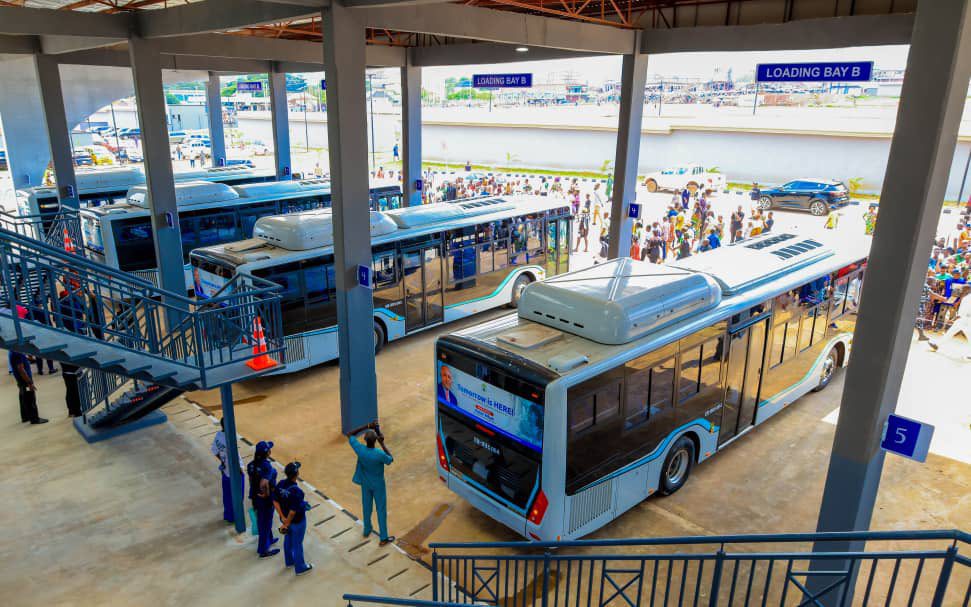
In a bid to upscale its transport sector, the Enugu government has procured 200 CNG-powered BRT buses, as well as 4,000 electric vehicle taxis, all to be assembled by the Anambra Motor Manufacturing Company (ANAMMCO) in Enugu.
This was revealed by the Commissioner for Transport, Dr. Obi Ozor, during a consultative meeting with transport unions and stakeholders at the ministry’s headquarters in Enugu on Monday.
Ozor pointed out that the first 1000 electric vehicle taxis would be completed within the first three months of production, while revealing major changes to Enugu’s transport system following the latest acquisitions.
According to him, the new Enugu CNG BRT buses are fully equipped with padded seats, Wifi, proper air conditioning, and a tracking system.
The commissioner also revealed that the state governor, Peter Mbah, has built 84 new bus shelters, adding to the existing public transport infrastructure in the state.
He noted that Enugu, a city of 2 million residents, needs at least 8,000 buses to meet the quota of an efficient transport scheme, and the state government is determined to hit these numbers in the near future.
Speaking further in the meeting, Ozor announced that the Enugu government is making plans to restrict the movement of Tricycles, yellow buses, and mini buses from five major highways in the state.
According to the commissioner, the affected traffic corridors are Okpara Avenue–Abakaliki Road–New Haven Junction–Naira Triangle–Emene Airport; Ogui Road–Chime Avenue–Naira Triangle; and New Haven Junction–Bisala Road–Rangers Avenue–WAEC–Nkpokiti–Zik’s Avenue. Other affected routes include Ogui Road–Presidential Road–WAEC–Nkpokiti, and the entire Agbani Road stretch.
Ozor reiterated that these lanes are dedicated to the movement of the new BRT buses, and full compliance by the state would be enforced henceforth.
“ We must be open to change. This reform is not about taking anyone’s job. It is about reorganizing the system so that BRT buses operate on the primary roads, yellow buses serve the secondary routes, and tricycles provide last-mile connectivity. Everyone has a place in the value chain,” he stated.
