

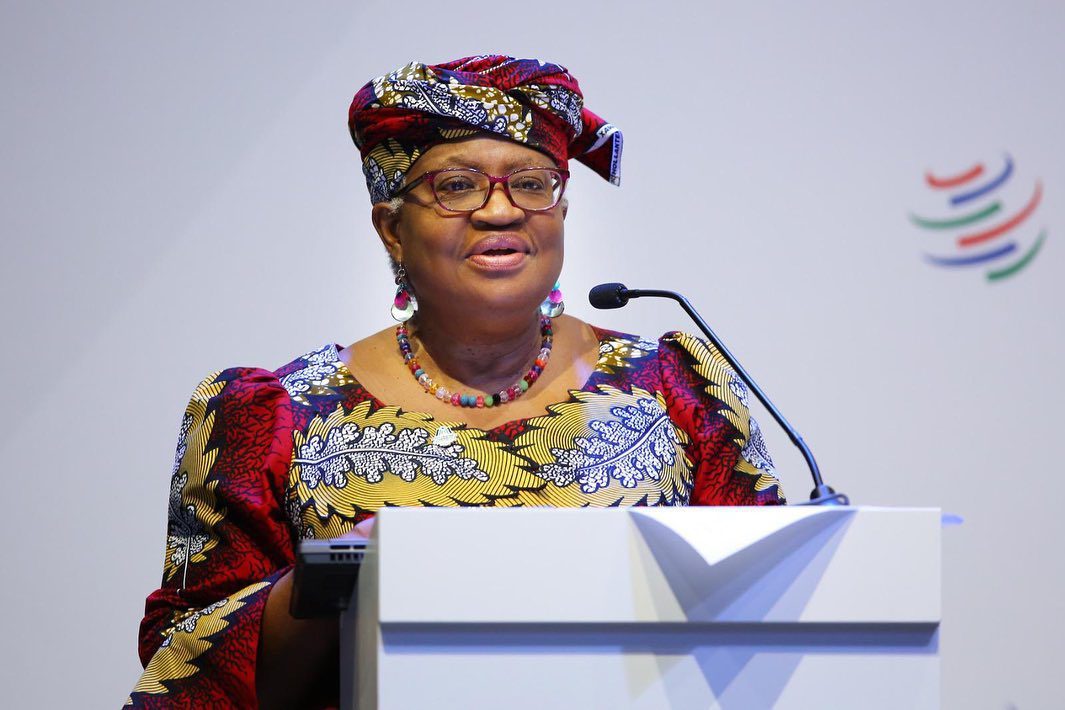
The Director-General of the World Trade Organisation, Dr Ngozi Okonjo-Iweala, has said that Delta State has the ingredients to become Nigeria’s next great industrial hub alongside Lagos, Kano and Port Harcourt.
Speaking at the ongoing Delta State Economic and Investment Summit, Iweala argued that Delta State can become an engine of the national economy and contribute immensely to the Nigerian project.
She added that a progressive and industrially empowered Delta State is good for Nigeria, as it helps decongest existing economic clusters in the country, creating new wealth channels while depopulating areas like Lagos and Kano that are becoming overcrowded.
Iweala admitted Lagos’s significant status in Nigeria’s economy. She noted that Lagos alone accounts for around a quarter of Nigeria’s GDP and half of its Non-Oil GDP. She thinks Delta State has the potential to measure up, given its natural and infrastructural endowments.
On a financial scale, Iweala believes Delta State has enough room to operate. Quoting Budgit’s 2025 State of States report. She pointed out that the state was ranked sixth out of 35 states in overall fiscal performance in the country and second in debt sustainability.
She added that fiscal prudence is key to a progressive Delta State capable of becoming a world beater with the right leadership.
Delta State’s 2026 Budget Review
On the state’s annual budget, the former Minister of Finance and Coordinating Minister for the Economy compared Delta’s economic strategy to what is obtainable at the federal level. She stated that the budget prioritised increased capital expenditure as part of its strategy to drive the state forward.
Iweala thinks this is a smart move. She believes that a stable macroeconomic environment at the federal level, with good exchange rate management, will reduce inflationary pressure, giving states a better chance of success.
The WTO director hailed and approved the Delta State government’s decision to develop Special Economic Zones. She cited a recent World Bank report that revealed that SEZs are an effective development strategy for limited governments. Governments can focus on a specific zone, improving its infrastructure and systems while attracting the required pool of labour to make it work.
Iweala thinks a well-oiled synergy between Delta State and the government, leveraging its gas reserves, can fund infrastructure in the state’s SEZs, adding to the state’s growth index. She also advised the Delta government to visit other SEZs in the country and get a first-class experience on how these zones run.
The Promise of a Blue Economy
On Agriculture, Iweala thinks Delta State can run an efficient blue economy leveraging its coastline. Delta’s coastline and rivers can enable the growth of this sector and have the capacity to sustain various business models sprouting from this sector.
The former economic minister revealed that Nigeria imports an average of 573,388 metric tonnes of fish and fish products with a market value of $866 million annually. She believes Delta State can become the country’s blue economy hub if it is strategic about it.
Aside from the importation of fish and fish products, Iweala pointed out the promise of Port services, Ship repair, and Marine Logistics as a valuable appendage to the state’s prospective blue economy.
Digital Infrastructure and Artificial Intelligence as the New Global Trend
In conclusion, Iweala stated that digital infrastructure and AI are the key pillars of the new generation and are worth paying attention to. She noted that trade is going digital and the state needs to prioritise connectivity as the backbone of digital infrastructure if it hopes to benefit from the wave.
The WTO director pointed out that Nigeria’s young people are all over the internet and trading digitally. This requires sound infrastructure accompanied by a system that ensures maintenance and awareness amongst the youths.
She added that sub-national governments will need to step up their game to complement Abuja’s efforts to move the country forward.
