

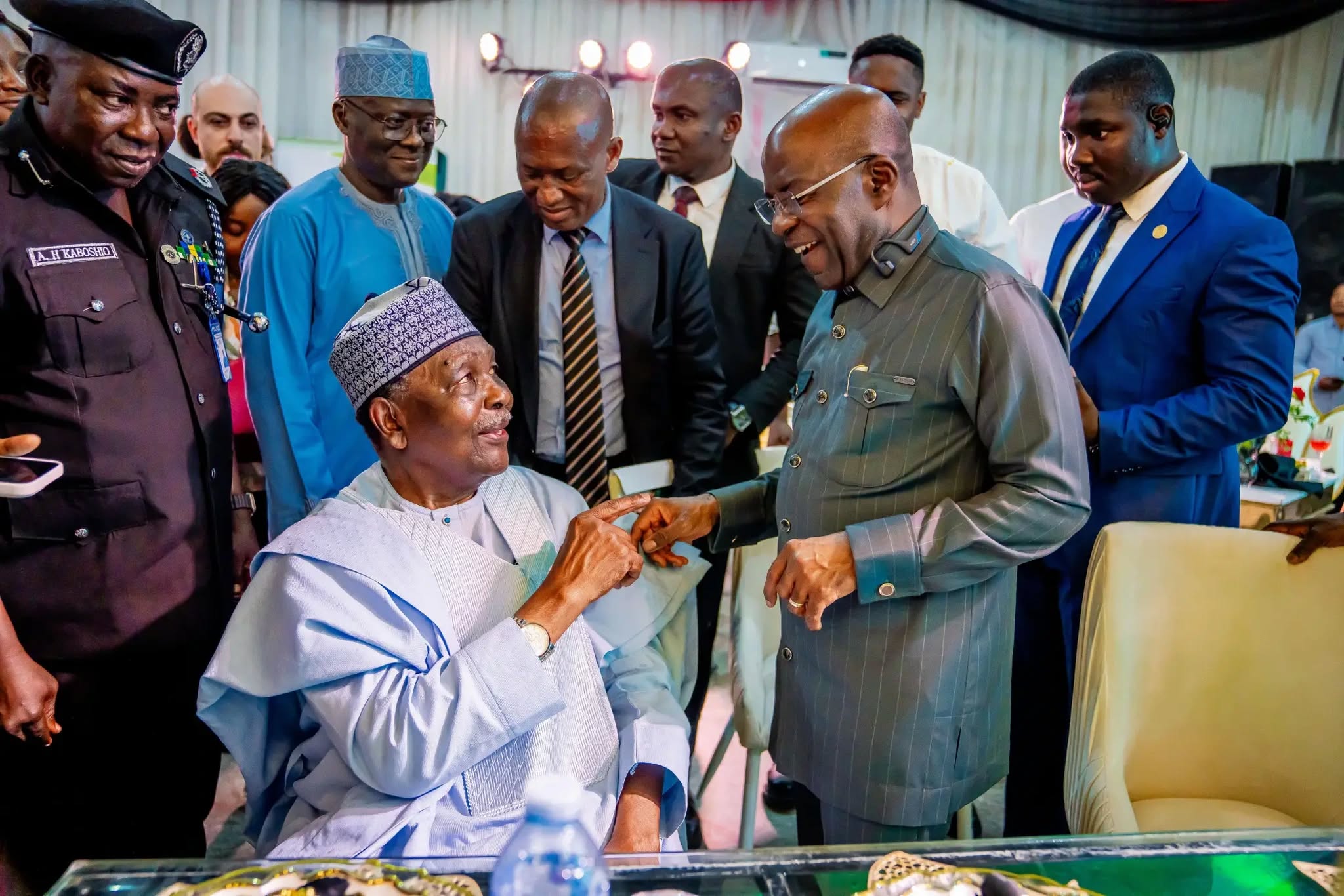
The Abia state governor, Dr Alex Otti, met Nigeria’s wartime leader, General Yakubu Gowon, at a book launch by the current minister of defence, General Chris Musa (Rtd).
The book titled: The Military Iconic Leader by the Minister of Defence, Gen. C. G. Musa (Rtd), was launched in Abuja today, February 11th 2026, marking a literary milestone for the newly installed Minister of Defence.
Present at General Musa’s book launch were the chief host, Nigeria’s Minister of Defence, General Chris Musa; Abia state governor, Dr Alex Otti; Nigeria’s wartime leader, General Yakubu Gowon; Former Senate President, Ahmed Lawan, and a host of other dignitaries.
Otti Strategically Prepares for 2027 by Courting the Centre
Alex Otti makes a public appearance in Abuja, where he is fast becoming very popular. The Labour Party governor is up against the old political structure in his state, backed by the ruling All Progressives Congress.
His chances of a second tenure hinge on his home-base support and his ability to court favour with the centre, bypassing APC foot soldiers in his state. At the moment, his key opponents are the current Deputy Speaker, House of Representatives, Hon. Benjamin Kalu, and the three-man force of Abia state ex-governors, consisting of Senator Orji Uzor Kalu, Theodore Orji, and Okechukwu Ikpeazu.
Alex Otti, a trained banker, rode to power on the back of a Peter Obi-led resurgence in the Labour Party. Peter Obi has left the party for the African Democratic Congress (ADC). This leaves Otti as the only major political subject in the party.
The Abia governor has stated that he is staying put in labour party. His long-term membership was boosted by the recent recognition of Nenadi Usman as the party’s main leader.
Otti meeting Nigeria’s wartime leader is a mark of how things have fast changed since the dark days of 1966. The new crop of Southeast leaders is very optimistic and willing to work with former foes. Provided that the interests of the eastern region are prioritised.
Abuja’s Cheeky Book Launching Culture

In Abuja, book launches by top politicians are less about literature and more about strategic legacy-shaping and elite networking. These high-octane events serve as strategic melting points where power is performed through attendance and massive financial donations.
Politicians use memoirs—often ghostwritten—to provide an “insider’s account” that corrects perceived misconceptions or defends their tenure. However, the true value lies in the launch gala. Here, the gathering of allies and rivals creates a rare display of elite unity.
Book launches in Nigeria function as high-stakes fundraising and lobbying platforms. These ceremonies often gross billions of naira, effectively monetising political capital while archiving personal versions of history for posterity.
