

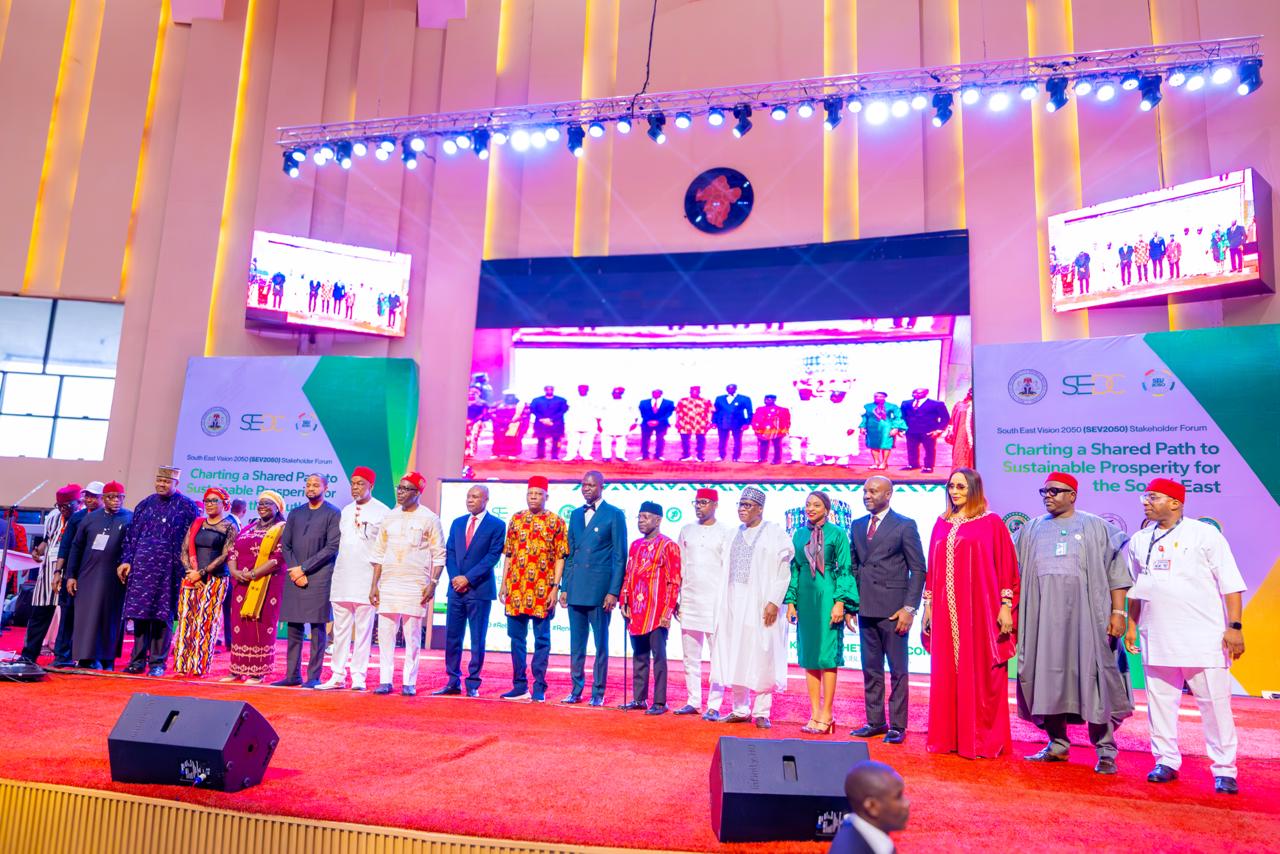
By next week, Tuesday, 10th February, the South East Development Commission (SEDC) will clock one full year since its formation by the Bola Ahmed Tinubu administration.
The first year of the commission has been marked by many positive conversations and exciting aesthetics. However, when it comes to tangible deliverables, the result sheet remains blank. For the experienced eye that has followed Nigerian affairs over the years, this stirs up a whole lot of memories and might even evoke historical trauma.
For the southeast, this is even worse giving that the region has produced many historical talkshops in the past, and the possibility of the SEDC being yet another one in the making leaves a sour taste in the mouth and sinks the heart.
To be fair to Mark Okoye, the captain of this new ship. The SEDC is yet to receive the N150 billion take-off capital approved by the Federal Government. In its 11 months of existence, the commission has been operating on strategic planning grants and state-level support.
However, this has always been the case with any Southeast program that requires federal funding. 11 months is enough time for the Federal Government to fund, in whole or in part, a commission it set up to assuage a region that has suffered marginalisation for nearly five decades.
In this article, Infoeast warns about premature excitement over the SEDC. We urge all stakeholders in the region to move beyond the euphoria of future plans and ideas and focus on real results that can only come from implementation.
Southeast Vision 2050 and the Ghost of Nigeria’s Vision 2020
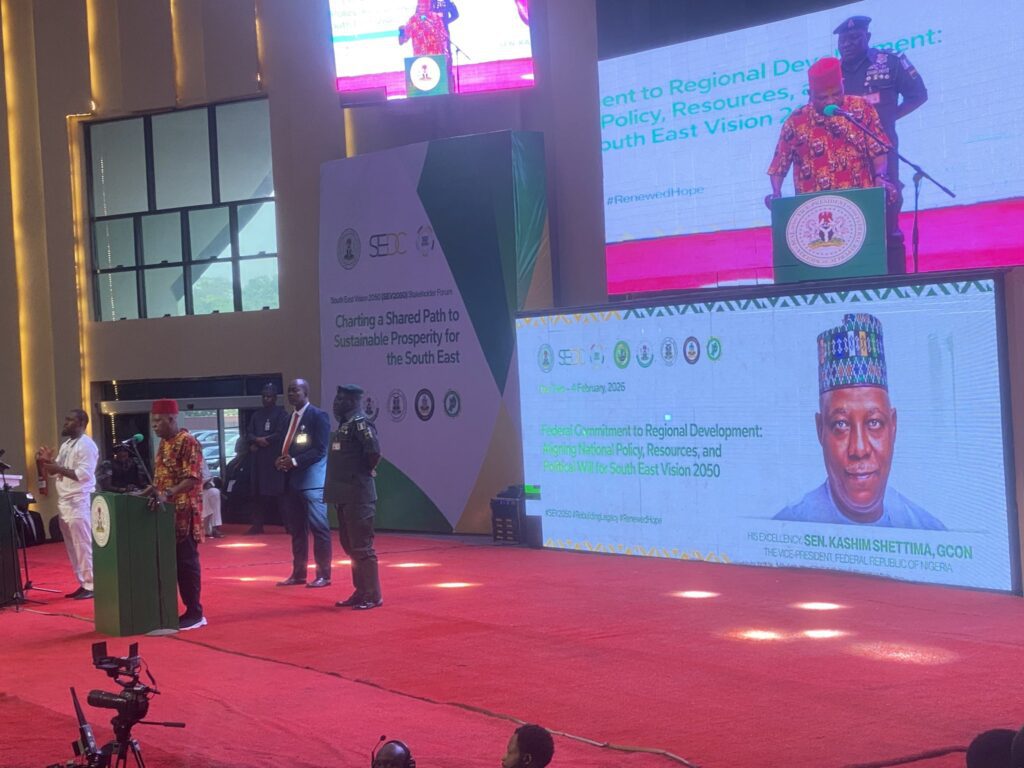
The Southeast Vision 2050 is a 25 year plan in motion. 2050 is 24 years away.
In Nigeria’s political calendar, this is three two-term presidents. Three new administrations, with new alliances, interests, and players, stemming from the ever-volatile Nigerian system. A 24-year plan without strong institutions in a country like Nigeria is a tall order, prone to many political hazards as the nation has witnessed before.
The SEV2050 reminds key observers of the famous Nigerian Vision 2020 put in place by the Umaru Musa Yar’Adua administration in 2009. The economic target outlined in the vision was not achieved, mainly due to political instability. Each new leadership brought its own competing agendas, like the Transformation Agenda and the ERGP, which diluted the original focus.
The SEV2050 faces similar challenge as the interest of susbquent adminstrations in the project is not guranteed. As the Tinubu adminstration which set up the commission stalls in funding it, the risk of the SEDC not getting any significant funding increases with each passing day of this administration.
Strategy is Great, Implementation is King
The launch of the SEV2050 in Enugu marks is a significant step for the commission but history warns that in Nigeria, great ideas often die in the strategy phase. For desired results,the Southeast and its esteemed stakeholders must pivot immediately from high-level discussions to aggressive implementation.
The region’s $10 billion infrastructure gap cannot be closed by communiqués. While the newly approved South East Investment Company is a brilliant financial vehicle, its success depends on bankability, the ability to turn a vision into a project that an investor can trust. Stakeholders must now move beyond the “What” and the “Why” to the “How” and “When.”
As the SEDC awaits the N150 billion funding from the Federal Government. The commision can start taking on these low hanging fruits moving from strategy sessions to implementation in the next few weeks.
- Harmonized Regulation: Instead of more speeches, states must immediately align their investment laws so a business can move from Aba to Enugu without a new set of red tape.
- Project Readiness: The focus must shift to engineering designs, environmental impact assessments, and land clearing for the proposed 600MW power plants.
- Accountability: The SEDC should be judged not by the quality of its 25-year plan, but by the number of short term regional projects added by 2027.
If SEV2050 remains a document or a forum, it will easily join the archives of failed Nigerian visions. If it becomes a checklist for action, it will become the region’s marshall Plan in reality.
