


On the last day of 2025, the presidential candidate of the Labour Party, Peter Obi, announced his defection to the African Democratic Congress (ADC) in a political event in Enugu.
The declaration put an end to months of speculation on the platform on which the former Anambra governor hopes to run for Nigeria’s highest office in 2027. The ADC move didn’t come as a surprise to political watchers, as it was the only logical step following the serious internal crises in the Labour Party and the People’s Democratic Party.
However, questions about who will clinch the party’s ticket in 2027 still linger among political heavyweights such as Atiku Abubakar, Aminu Tambuwal, Peter Obi, Mallam Nasir El Rufai, and Rauf Aregbesola as they weigh their chances of securing it.
Obi’s defection to ADC wasn’t a standalone event. The move catalyzed a significant realignment in the Southeast political landscape, highlighting Obi’s clout as a politician and his influence on his peers.
The Senator representing Anambra Central, Senator Victor Umeh; Anambra North, Senator Tony Nwoye; and Abia South, Senator Enyinnaya Abaribe, all joined Peter Obi in moving to the ADC, defying their former parties.
In this short write-up, INFOEAST examines why these Senators defected and the projected depth of Obi’s political influence in the southeast as the All Progressives Congress tightens its noose on the region.
The Obi Umbrella and the Quest for Political Survival

Aside from securing 6 million votes in the 2023 presidential election, Peter Obi proved to be a dominant force in Nigerian politics by installing people in power by sheer association. In the Southeast, a governor, three Senators, and a House of Representatives member rode to power under the Obi umbrella, riding on his momentum and political clout.
Dr Alex Otti clinched Power in Abia state; Senator Umeh and Nwoye returned to the Senate in Anambra; Abaribe retained his seat in Abia South; and Prof Lilian Orogbu, a complete newbie and university professor, clinched the Awka North and South Federal constituency.
It is worth noting that these individuals, before their victories in the polls, had little or no political base, making their victories a direct product of the Obi effect.
All the political figures named above followed Peter Obi to ADC, except the Abia state governor, who is still marking time in the Labour Party. Their collective move shows that despite Obi’s dwindling political fortune, these political figures still believe his clout is enough to keep them in power and are not ready to risk going solo.
Their move is purely based on Political survival as they have more confidence in the Peter Obi brand than any political party.
Obi’s Eastern Base Under Threat from APC Machinery
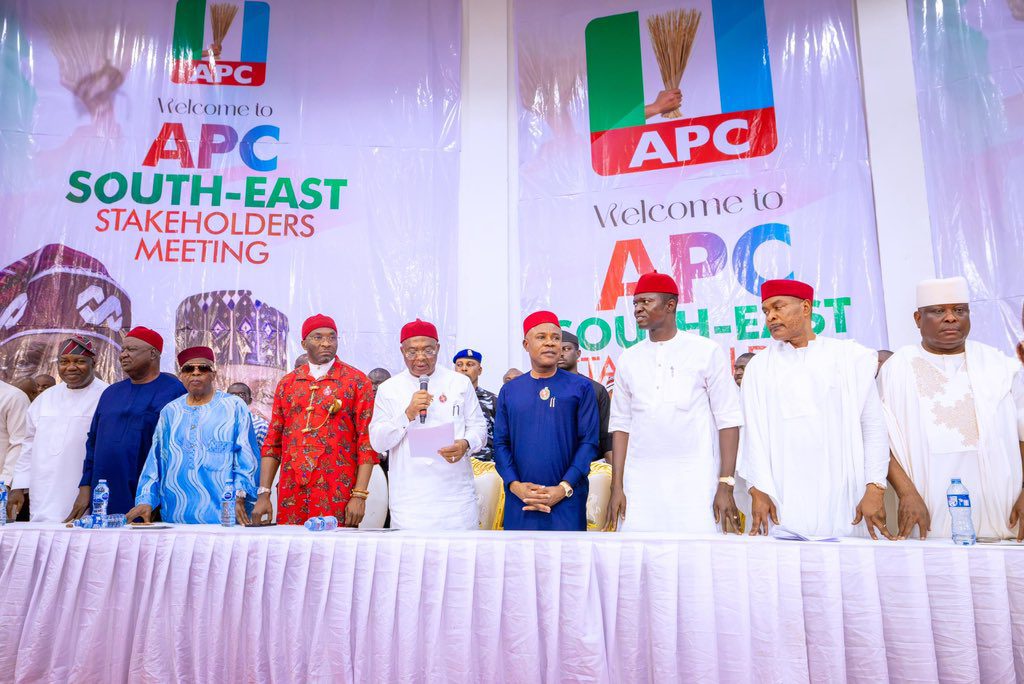
Despite the refreshing news that three South East senators and one member of the House of Representatives have followed Obi to ADC. The reality remains that his south-east political base is under threat as the APC gains serious inroads into the region.
The APC now has three out of five southeastern governors in the bag, with the remaining two under pressure to join the fray. The APC in the South East, during their stakeholders meeting, endorsed President Tinubu as the party’s consensus candidate for 2027.
The Obi camp will have to go head-to-head with three sitting governors in Imo, Enugu, and Ebonyi, who will use everything at their disposal to back Tinubu for 2027. The South East remains the only region in Nigeria where Obi is expected to get 90% of the votes.
APCs’ inroads into the region present a herculean task for the Obi team and put his chances of hitting his 2023 figures in serious doubt. Political speculators believe that a Vice Presidential ticket with Atiku as the frontman still remains Obi’s surest route to power.
Whether Obi will agree to this after several years of global advocacy and grassroots building remains the political question of the decade.
