

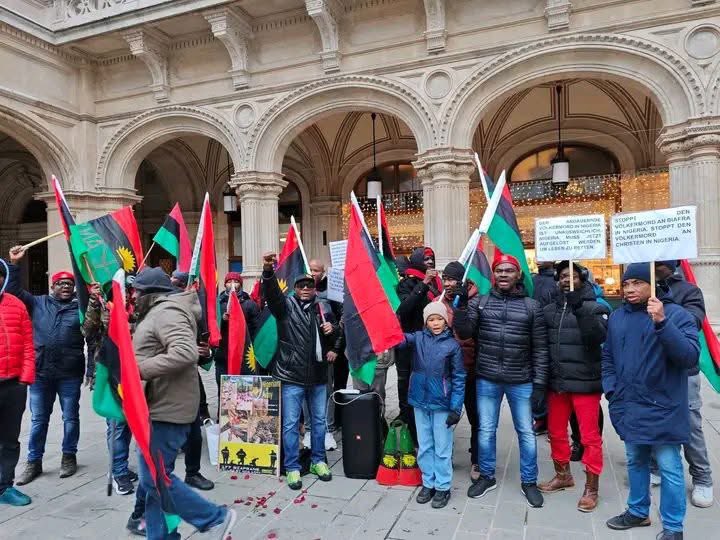
Members of the Indigenous People of Biafra (IPOB) in Austria held protests in the European country, asking for the release of their leader, Nnamdi Kanu.
The protests themed “FreeNnamdiKanuNow” are part of a coordinated civil action by members of the Pro-Biafran group in various countries following the conviction of their leader and subsequent life sentence.
A Federal High Court in Abuja sentenced Nnamdi Kanu to life in prison following a conviction on a seven-count charge bordering on terrorism and other violence-related charges.
The Nigerian authorities moved Kanu to a correctional facility in Sokoto a few days after his conviction, sparking outrage amongst his supporters and concerned Nigerians. His conviction has drawn moral support and solidarity visits from prominent figures in eastern Nigeria. The governor of Abia State, Alex Otti, visited Kanu in Sokoto prisons, a major highlight since his conviction.
Last Month, Protests were held by the IPOB branch in Italy, days leading up to the conviction of Nnamdi Kanu. The protests in foreign soil represent a change in strategy by the pressure group. Protests in Nigeria have been marred by high-handed use of force from Nigerian security authorities.
The approach of Nigerian forces to the protests and rallies held by IPOB has always bordered on brute force, leading to loss of lives and playing an underlying role in the perceived radicalisation of the group.
In 2017, the Nigerian Army conducted a military exercise titled “Operation Python Dance” in the South East. The operation led to direct clashes with members of IPOB, resulting in deaths and stirring controversy.
IPOB has no legal registration in Nigeria and remains proscribed. However, reports suggest the group is registered in over 20 countries, with the UK and the US having the largest numbers.
The pressure group battles with fragmentation, backed by various factions. These groups are usually formed by former members and compete for control of the narrative and resources.
