

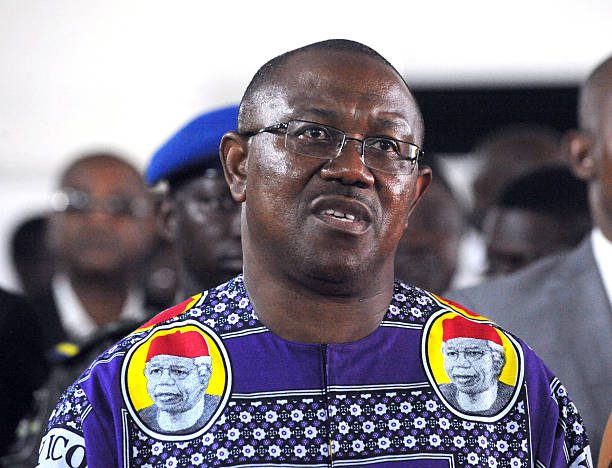
Peter Obi was the governor of Anambra State from 2006 to 2014, an 8-year period in which Anambra’s domestic debt remained below N15 billion and constituted a measly 0.17% of the total subnational debt in his last year as governor.
The figures point towards a healthy management of state resources and a cautionary approach to borrowing, leveraging the state’s executive power. The recent data by Cable Index maintained that Anambra’s Domestic Debt never crossed the N15 billion mark throughout Obi’s tenure as Anambra Governor.
The data revealed that Anambra’s domestic debt dropped to as low as N2.88 billion in 2014, Obi’s last year as governor. Other years were quite similar, with the highest year of domestic debt being 2012, as debt hit the N14.30bn mark.
Obi’s Domestic Debt Scorecard
| Year | Domestic Debt | % of Total Subnational Debt |
| 2011 | N6.40bn | 0.52% |
| 2012 | N14.30bn | 0.92% |
| 2013 | N3.03bn | 0.19% |
| 2014 | N2.88bn | 0.17% |
Anambra’s domestic debt under Peter Obi is a masterclass in frugal management of state resources in a country where the opposite is the norm. As of Q3 2025, the combined debt stock of all 36 states and the FCT in Nigeria reached approximately N4.00 trillion.
This implies that the average debt stock per state across Nigeria is a whopping N108bn. This is a far cry from what Obi managed to pull off as Governor. The Q3 data reveal that Lagos, Rivers, Delta, Enugu, and Ogun are the most indebted states in the country, owing nearly N2.04trn in domestic debt. This is over 50% of the entire debt stock across the 36 states and the FCT.
As Obi goes to the polls next year under the Nigeria Democratic Congress (NDC). It is important to remember that part of his legacy reportedly includes leaving behind N75 billion in savings and investments for Anambra State.
