

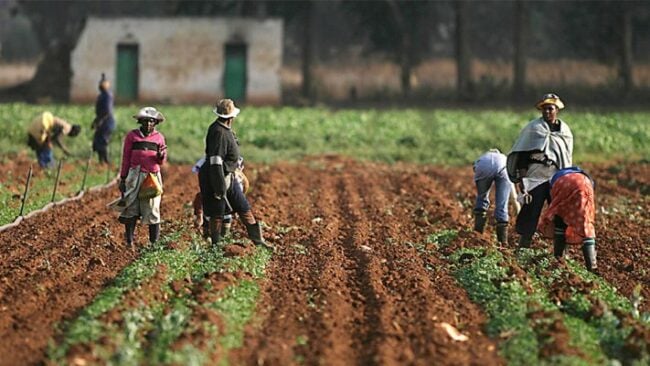
Farmers in Ebonyi state lamented the rising cost of running their farming business due to the abysmal state of the Nigerian economy.
Joseph Egede, a farmer from Alibaruhu Ishieke in Ebonyi Local Government Area, narrated the ordeal to newsmen, highlighting the high cost of inputs and the depreciation in value of their produce. Egede explained that the dire situation has pushed many into debt, affecting the output of the farmers in the state.
Fertiliser used to be N27,000 per bag; now it is N57,000. Herbicides are now N3,500 to N4,000, depending on the market. Meanwhile, the same bag of rice we sold for N52,000 in December is now selling for N32,000,”
“We are losing up to N20,000 per bag of rice. After spending money on land preparation, fertiliser, and labour, we still sell at a loss. It’s frustrating,” he said.
The farmer called on the state government to implement subsidies to farmers so as to drive down the cost of production and ensure food security and affordability in the market. He complained about the high cost of manpower and what it takes to run a farm today.
Read Also: Environmental Foundation Plants 500 Trees in Abakaliki to Tackle Climate Change
“I spent N850,000 today alone just to mulch my farm using manual labour. With machines, I wouldn’t have spent more than N50,000. We need tractors, we need machines—we can’t keep using hoes and matchets or cutlasses
Additionally, Egede harped on the burning need for irrigation and dams in eastern Nigeria, comparing farming in the region to what it is up north. He stated that Northeners farm three times in a year due to their efficient irrigation system, but in the eastern region, the rivers dry up by November.
On a closing note, the farmer highlighted how the dire situation Ebonyi farmers are facing will affect the much-revered New Yam Festival this year. He believes many farmers might resort to buying yams instead of harvesting on their farms like they used to do.
Ebonyi State, Nigeria’s top agricultural hub, excels in rice, yam, cassava, maize, and beans production. With 99.5% of households engaged in crop cultivation, it leverages fertile land and climate information services to boost local production and serve the eastern region and Nigeria as a whole. The state boasted over 34,200 farmers in 2020, driving its agricultural revolution.
