

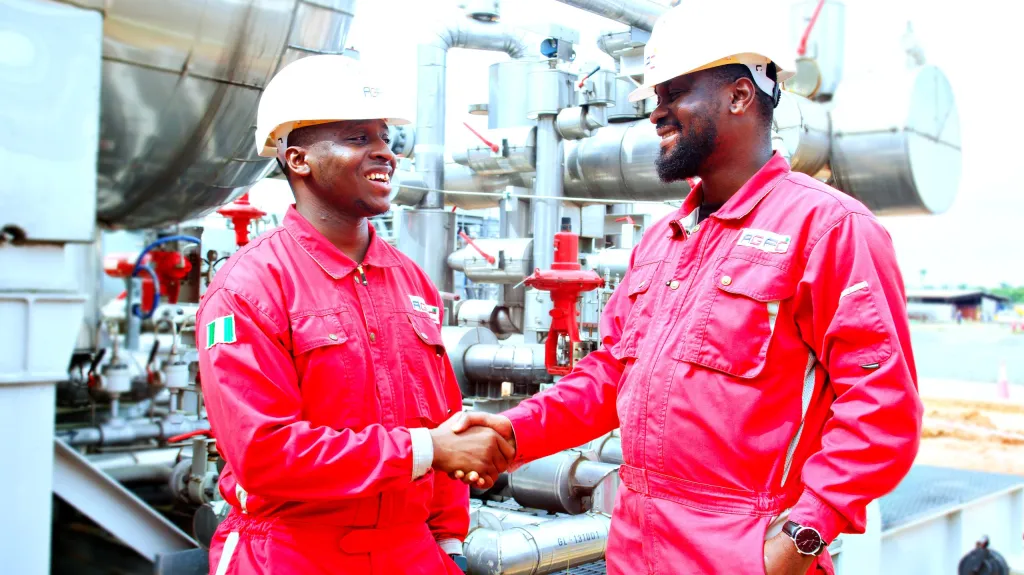
Anoh Gas Processing Company is set to expand its physical footprint in Imo state by constructing a new state-of-the-art residential quarter, complete with recreational facilities for its staff.
Anoh is also set to double its production capacity from 600 mmscf to 1.2 billion mscf. This improves its economic offering to Imo State and, by extension, to Nigeria. It follows in the footsteps of major players in the Oil and gas sector who usually construct state-of-the-art residential quarters for their staff. This significantly improves their quality of life and increases the retention rate of talent on their roster.
ANOH, which stands for Assa North-Ohaji South Gas Processing Company, is an incorporated joint venture. It is equally owned by Seplat Energy and the Nigerian Gas Company (NGC), a subsidiary of NNPC.
Anoh Gas at the Forefront of Imo State’s Gas Fortune
Anoh Gas has its major plant in Ohaji/Egbema Local Government Area of Imo State. It leads the conversation in the extraction and production of the 7.8 trillion cubic feet of proven gas reserves in Imo state. Imo State is noted for its massive energy potential, as it holds one of the country’s largest gas reserves.
Ogbugo Ukoha, Executive Director at the Nigerian Midstream and Downstream Petroleum Regulatory Authority (NMDPRA), confirmed that Imo State has the highest gas reserves in the country, lending credibility to the argument.
Last year, Imo State’s Hope Uzodimma complained about stakeholders in the oil and gas sector. He complained about those who operate in the state but maintain their physical presence in Lagos.
Uzodimma compelled such entities to relocate their headquarters to Imo State to contribute to the host state’s economy. He promised adequate security and world-class hospitality for executives and expatriate staff.
Anoh Gas, with its new residential quarters, seems to be heeding this call. It is taking the bold step of establishing a significant physical presence in the state outside its plant. Imo State is home to seven major oil and gas companies. They extract and produce petroleum resources from the heartland of the eastern region.
