

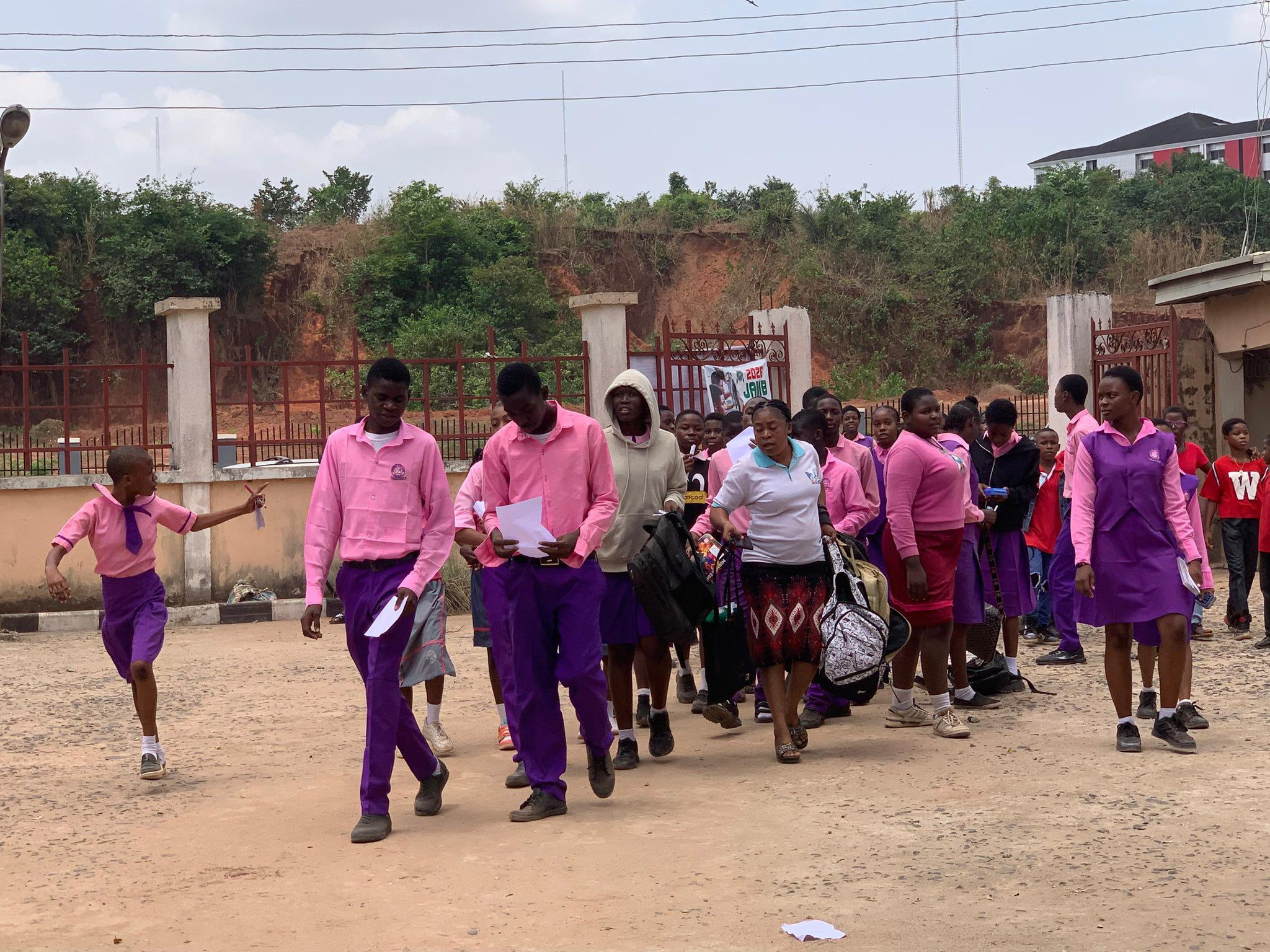
The just-concluded Southeast Maths Olympiad Competition provided insight into knowledge gaps in the subject among Primary students.
Primary school students participated in the regional maths competition under the primary category across the five southeastern states of Imo, Enugu, Anambra, Ebonyi and Abia.
The convener of the competition, Alex Onyia, stated that data from the competition has shed light on potential areas for teachers to focus on following general lapses in these areas among students.
” While studying the data from the South East Maths Olympiad, I can see exactly where children from different states are struggling in Maths. But generally, primary school students struggle with these topics: Measurements, Algebra, Profit & Loss, Ratio & Proportion, and Coordinate Geometry,” said Onyia.
The education activist pointed out that these topics usually extend into university, following students throughout the lifecycle of their education. He called for a strategic approach in solving this issue, as the topics are very important and cut across various fields.
The Southeast Maths Olympiad Competition took place on Saturday, February 28th, across various centres in the region. 11,522 students participated, with Imo, Anambra and Enugu states recording the highest number of candidates.
Abia State recorded the fewest students and the lowest average marks across the five states. The grand finale of the competition is slated for March 7th in Enugu and would be broadcast live by Afia Tv, the region’s biggest broadcaster.
Onyia previously stated that his mission is to revive the love for mathematics amongst the next generation of students while powering the next generation of STEM talent in the region.
Private donors contributed funds for the Southeast Maths Olympiad via the Intervention for South East Education Fund (ISEE). Terra Industries Co-founder Nathan Nwachukwu remains the fund’s biggest donor, donating a total of N15 million.
ISEE also funds a host of other initiatives, including the “Back to School” Initiative, which aims to reduce the number of out-of-school children in the eastern region.
