

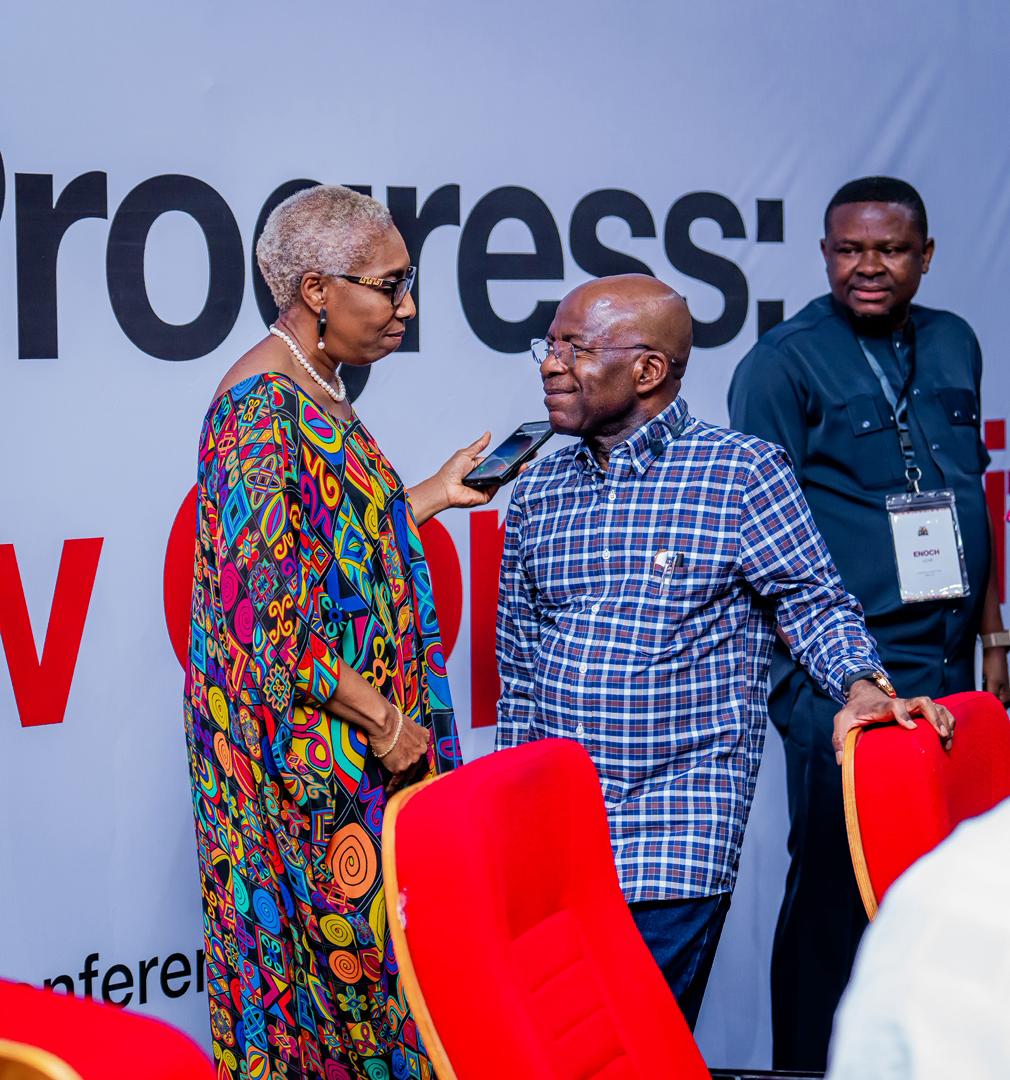
Abia state governor, Alex Otti, concluded the 2026 First Quarter Executive Council Retreat with an address on Sunday, March 1, at the International Conference Centre, Umuahia.
Otti seized the opportunity at the Executive Council Retreat in Umuahia to explain his style of governance and leadership, stating that his approach represents his plans and mission for Abia state.
Full Text
Protocol
” Several persons, including many in this room, have confronted me to ask why we put so much effort into this job that there is hardly any time to rest, even on weekends. A few of you have had to remind me that this is not how to “do government work,” wondering why we work even harder than those in the private sector. My response has stayed the same every time: we are on a destiny assignment, not a casual stroll through public office. It is only when we interpret our roles through the lens of mission and destiny that the daily sacrifices will take on a more profound meaning. I agree entirely with those who insist that we put so much into everything as can be seen from the experience of the last 2 days, but as I have also said on a few occasions, every sacrifice made for the good of our people, the future of our state and the glory of our land is well worth it. In my opening address yesterday, I announced that we are privileged to have been called to serve at this point in our political and social evolution, where mediocrity and empty gestures can no longer answer the tough development questions of the day.
” It has been 2 days of gruelling but rewarding intellectual engagements, and I thank everyone for the active participation over the entire stretch. It also has to be admitted that it has been tough for many of us, but again, that is the price we have to pay for the responsibility entrusted to us. The world is evolving at a pace that is difficult to comprehend, so the least we can do is constantly challenge ourselves to raise the bar: what was deemed satisfactory only yesterday may come off as subpar today. It is, therefore, expected that whoever wishes to reach and remain at the top must, at a minimum, stay awake at the place of learning and active in the field of execution, for in the end, learning without execution offers no real advantage. The bottom line is that excellence in preparation is only the entry price to the place of impact; building an enduring legacy requires consistent process evaluation, environmental awareness and the capacity to evolve in response to emerging dynamics within the relevant ecosystems.
” We have raised the bar on governance for the simple reason that we did not approach our job with the I have arrived mentality that is common in this part of the world. Our role as public office holders in Abia State is no less important than that of those driving the innovations at the heart of the changing global economic order. Our results speak for themselves, but if we get complacent and stop asking tough questions of ourselves, everything would slide back to where it was before we came in. We are, therefore, encouraged to resist the temptation to rest on our oars; if anything, the public appreciation should spur us to reach for more, do more and continually point our people to what is possible with dedication and unyielding commitment to service. Our legacy, beyond the physical infrastructure, will rest on how we prepare our children for the opportunities of tomorrow — the hope we stir in parents’ hearts that their children will inherit a better future.
” This administration appreciates that we may not be able to change the past, but Providence has offered us the platform to play a role in shaping the future of our land. It is for this reason that the government prioritised education and healthcare from the beginning, as they are directly tied to everything we seek to achieve. There can be no doubt that good progress has been made in those 2 sectors, but our expectations are much higher. I am, however, confident that with what has been learned from this retreat, things will accelerate faster, as there can be no further excuses for hitting less than the perfect score. The same applies to every other sector. We are therefore required to gird our loins and give everything we can to guarantee the successful execution of the administration’s broad development agenda through our respective Ministries, Departments and Agencies (MDAs). Yesterday, I reminded us that no office or official is insignificant, as everything is interconnected. Our economic and social development framework will crash in an instant without a robust legal and legislative architecture to underpin it, just as inefficiency in the administrative sector would drain resources unnecessarily and sabotage our capacity to execute.
” I believe that the challenge of working in silos, building walls where bridges would have been built or perhaps viewing colleagues as adversaries has been sufficiently dealt with. I was, in fact, shocked to learn that we still have officials who have yet to learn that you cannot go wrong by working collaboratively. On the sidelines of the session yesterday, I told a small team that when you work alone, you restrict yourself to just what you know, and ultimately, the system suffers from the limitations of your finite knowledge. However, by bringing all the stakeholders to the table, you not only deepen your knowledge but also create the environment for superior output. It is therefore strange that anyone in this room would not see the value of mining the knowledge, reach, and experience we have at our disposal. To that effect, I am immediately directing all MDA heads to institute monthly sessions in which every appointee connected to the office, including relevant directors, meets to share progress reports on ongoing projects and programmes, identify challenges, and make projections for the next month. This should happen in the first week of every month, after the General ExCo, to keep everyone on the same page. Minutes and resolutions from such meetings should be sent to my office as soon as they are concluded; there will definitely be sanctions for non-compliance.
” For the current fiscal year, we had already outlined specific projects that must be delivered, and I had directed that everything be committed to achieve the result that we seek. These include about 5 smart schools, strategic secondary and tertiary health facilities, and other projects in transport, works, power, public water supply, and, of course, agriculture. I have also drafted a few people to work with the primary teams to guarantee that there are no delays or arbitrary design or cost variations. These projects are tied to the holistic governance outcomes we seek to achieve this year, with a focus on improving our human development index as a State. Given the importance of these projects, I will not hesitate to step in and take direct control if it is established that the frontline MDA is not fully alive to the full spectrum of its responsibilities.
” We are not discounting the likely impact of some of the recent major geopolitical developments on project financing and delivery, but again, our eyes must consistently stay on the ball. We should be able to control what we can, and then pray that everything else turns out well. What we must, however, not do is to leave ourselves unprepared, and this brings me to the subject of revenue mobilisation and process optimisation. We cannot say with certainty what will happen to our external revenue over the next few months, but we can do more to improve our internal earnings. To that effect, I invite anyone with practical ideas that can support our internal revenue drive to quickly forward them to my office for evaluation and consideration. It is imperative that we become active in the revenue mobilisation drive, as it is from that basket that we will fund the recurrent elements of our 2026 budget proposal. The primary interest would be to identify channels of leakages, poor performance or malpractices. Subsequently, we shall begin to explore unexplored revenue pathways and how we can step into those areas, firstly to create value and, ultimately, to earn from our investments. Real estate, solid minerals, hospitality and ICT sectors appear to hold great prospects for general development and public revenue optimisation. We may therefore need to think broadly and deeply about what we need to do in these and other areas.
” The summary of my presentation is that there is a lot of work ahead, and this retreat has opened our eyes to the goldmines we may be missing. I am glad that we have had the opportunity to talk and learn from each other. I would like to especially thank the retreat organising committee and our partners at PwC for all the hard work they put in. I would also like to appreciate colleagues who delivered insightful presentations that deepened our awareness and policy outlook. Commendations are equally due to our external resource persons, Dr Tony Muhumuza of the United Nations Development Programme, and Alero Ayida-Otobo, the CEO of the School of Politics, Policy and Governance, for their generosity in teaching and mentorship. I hope they will continue to avail us of the opportunity to draw on their foundation of wisdom, because I am convinced that they still have more to offer us. Lastly, I would like to thank all of us for our enthusiasm for learning and service. I pray Almighty God continues to watch over us and bless our dear State, Abia.
Thank you for listening.
