

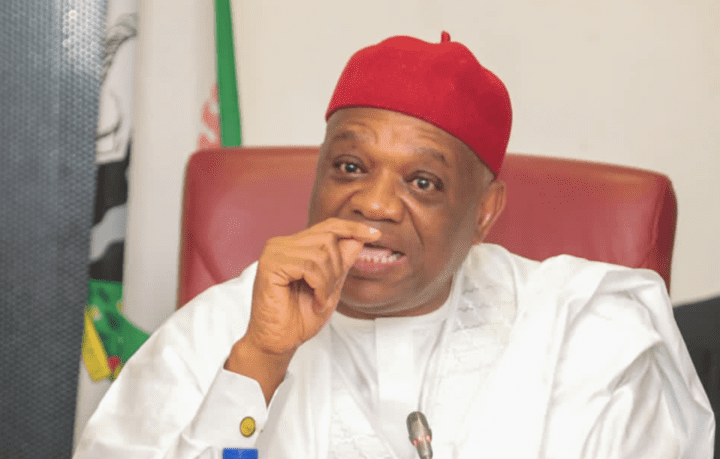
The Senator representing Abia North Senatorial District, Senator Orji Uzor Kalu (OUK), stated that a key issue with bad leadership in Nigeria is that the majority of its leaders are former fraudsters and criminals who are used to taking people’s money.
The Abia North senator, in an exclusive interview, argued that people who are accustomed to taking money that they didn’t earn are unlikely to stop such a habit, hence the heightened corruption in Nigerian leadership.
” Most people, some of them were overseas doing 419, doing all kinds of crime all over, and you know a leopard cannot change its skin. When people are used to taking money that doesn’t belong to them, they can never change their character. So if you are expecting them to change. It is not true they can never change,” Kalu said.
Kalu explained that the solution to this problem is a complete overhaul of the class of people who make up Nigeria’s ruling class. He addressed the politicians and the civil servants, who he believes make up the bulk of the ruling class, calling on people of good character and reputation to come out and join the ruling class.
Senator Orji Uzor Kalu was the governor of Abia State for 8 years before moving on to the hallowed chambers of the Senate. He is an astute businessman who founded SLOK Holding, a West African conglomerate in the 1980s.
Infoeast View
- Slok Holdings is a West African conglomerate with diverse operations spanning shipping, banking, oil trading, manufacturing, and media. Kalu started his business journey with $35 borrowed from his mother for palm oil trading between Nigeria’s east and north,
- He expanded into furniture resale, leading to SLOK’s formation. Key SLOK subsidiaries include SLOK Nigeria Limited (shipping), First International Bank (finance), Sun Publishing (media like Daily Sun and New Telegraph), Supreme Oil Limited (energy), and international arms in the UK, US, Ghana, Togo, and beyond.
- SLOK is widely reported to generate up to $2.5 billion in annual revenues and create thousands of jobs, influencing Nigeria’s economy.
